
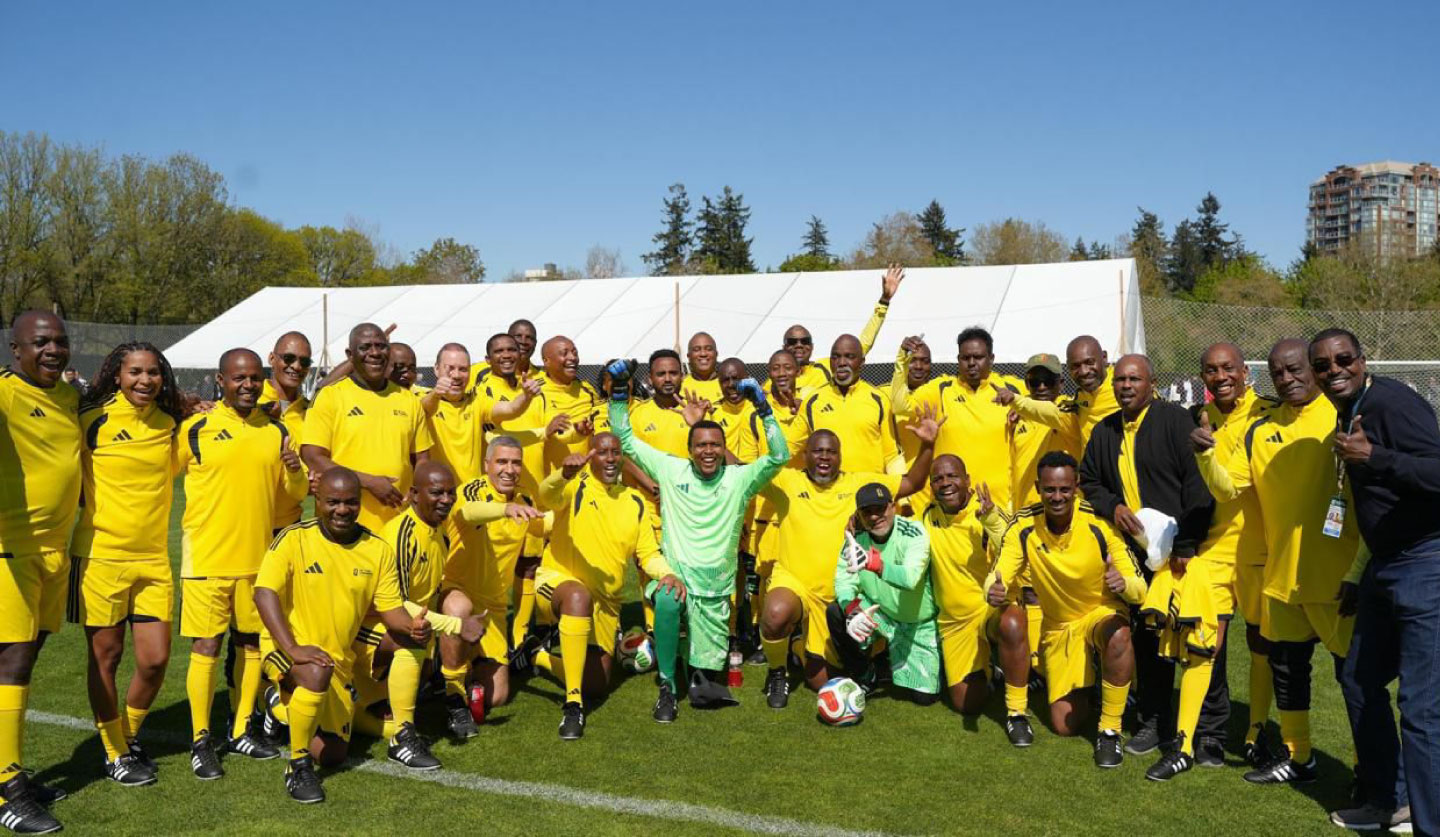
Anyone who arrived in Vancouver expecting only speeches, procedural votes and diplomatic handshakes soon discovered that football had other plans. Before the formal business began, there was a match – pure, unfiltered, slightly chaotic, and exactly the kind of icebreaker only football can provide.
For CAF, the stage belonged to the Motsepe Select XI, captained by the ever-charismatic Samuel Eto’o, with Khalilou Fadiga bringing the kind of effortless class that reminds you great footballers never truly lose their touch.
And then came the small matter of goalkeeping duties. Between the posts, perhaps unexpectedly, but certainly not unconvincingly, stood yours truly. What followed was a series of moments that, depending on who is telling the story, could be described either as routine saves or, more accurately, as goalkeeping brilliance. There were reflex stops, fingertip parries and the occasional full-length dive that suggested this was not completely unfamiliar territory. One begins to appreciate, in those moments, the pressure carried by professionals such as Washington Arubi and Elvis Chipezeze. And perhaps, just perhaps, one also begins to imagine a future selection dilemma. Competition, after all, can emerge from the most unlikely places.
Jokes aside, there was something deeply symbolic about that match. For a brief moment, administrators, legends and football leaders put aside their titles and returned to the simplest version of the game. It was a reminder that football, at its heart, remains a shared language. It connects boardrooms to dressing rooms, policy to passion, and strategy to the emotion that first made us fall in love with the sport.
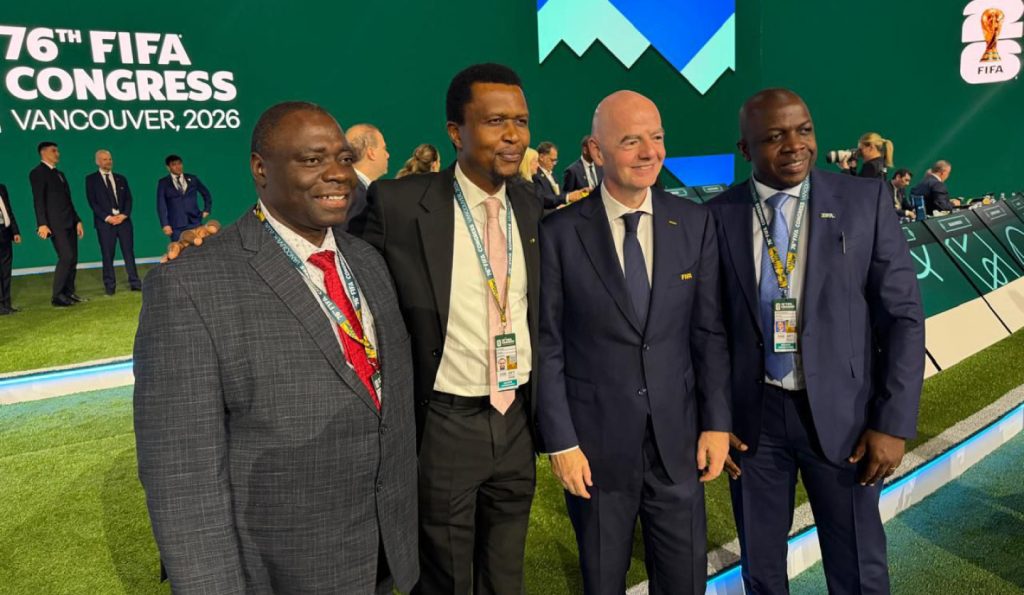
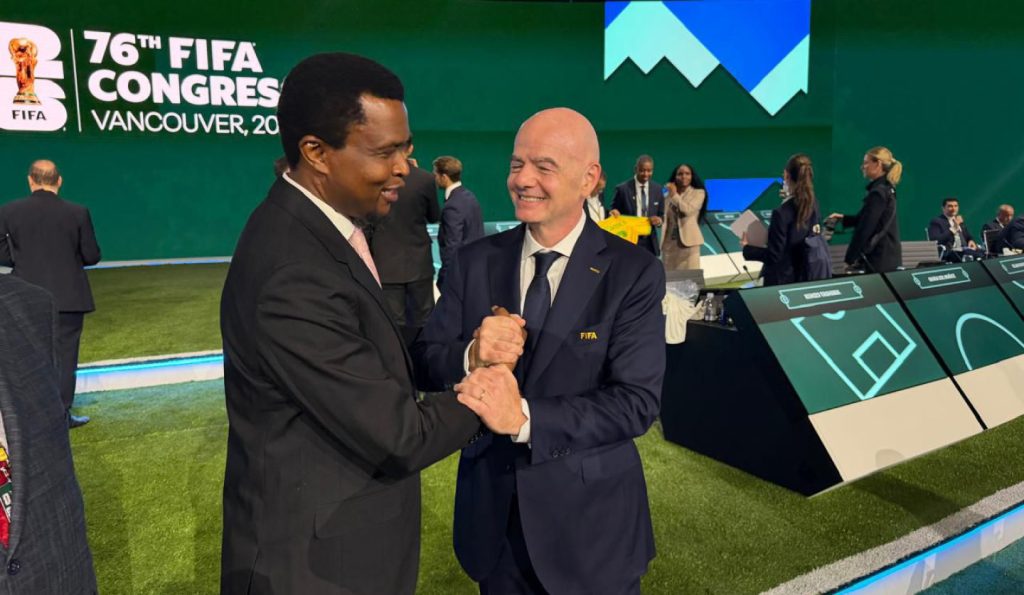
Once the boots came off and the suits went back on, the serious business of the 76th FIFA Congress took centre-stage. Beneath the formal proceedings, several important themes emerged, each with real significance for Zimbabwean football.
The first was finance. The global football economy is changing, and with the expanded FIFA World Cup expected to generate unprecedented revenues, FIFA has signaled a stronger commitment to redistribution. For associations such as ZIFA, this presents a genuine opportunity: more resources for infrastructure, youth development and the domestic game, provided those resources are supported by accountability, planning and clear vision.
The second major theme was possibility. The expansion of the FIFA World Cup to 48 teams continues to reshape the ambitions of many nations. For Africa, this is more than a structural change. It is an opening. Qualification remains difficult, but the pathway is now broader than before. For Zimbabwe, the question is no longer whether the door exists. The question is whether we are ready to walk through it.
Closely tied to this is the growing financial value of qualification. Reaching the World Cup now carries more than sporting prestige. It brings meaningful economic impact. In practical terms, success on the pitch can directly strengthen the federation off it. That connection between performance and sustainability should sharpen focus across every level of our game.
But opportunity also brings responsibility. Governance and integrity were central to many discussions in Vancouver. The message was clear: credibility is currency. For Zimbabwe, given the administrative challenges football has faced in the past, this is both a warning and a guide. Lasting progress will depend not only on results, but on strong systems, transparent structures and disciplined leadership.
There was also a wider recognition of football’s place in the world. In a global environment that often feels divided, the game continues to bring people together. For Zimbabwe, this is not an abstract idea. Football remains one of the country’s most powerful tools for national unity, pride and international engagement.
At the same time, practical concerns were not ignored. Smaller nations raised valid questions about the rising costs of participation, from travel and logistics to preparation in an increasingly demanding global calendar. For ZIFA, this reinforces the need for strategic partnerships, commercial innovation and sustainable financing. Growth must be ambitious, but it must also be properly supported.
Vancouver also offered a glimpse into the scale of what lies ahead. The 2026 FIFA World Cup is expected to be the most commercially successful edition in history. For Zimbabwe, it should serve as inspiration as we look towards 2030. There is a real opportunity to connect with the global football moment through diaspora engagement, sponsorship alignment and stronger national team brand positioning.
Vancouver was, in many ways, a study in contrasts. On one hand, there was a football match where pride was at stake, saves were made and laughter echoed across the pitch. On the other, there was a Congress where decisions were taken that will shape the future of the global game.For Zimbabwe, the lesson is to embrace both sides. Strategy, governance and funding matter. They are essential. But the game itself, played with joy, commitment and a little audacity, must always remain at the centre of everything we do.
And as for the goalkeeping? Well, the gloves are still warm.
More News
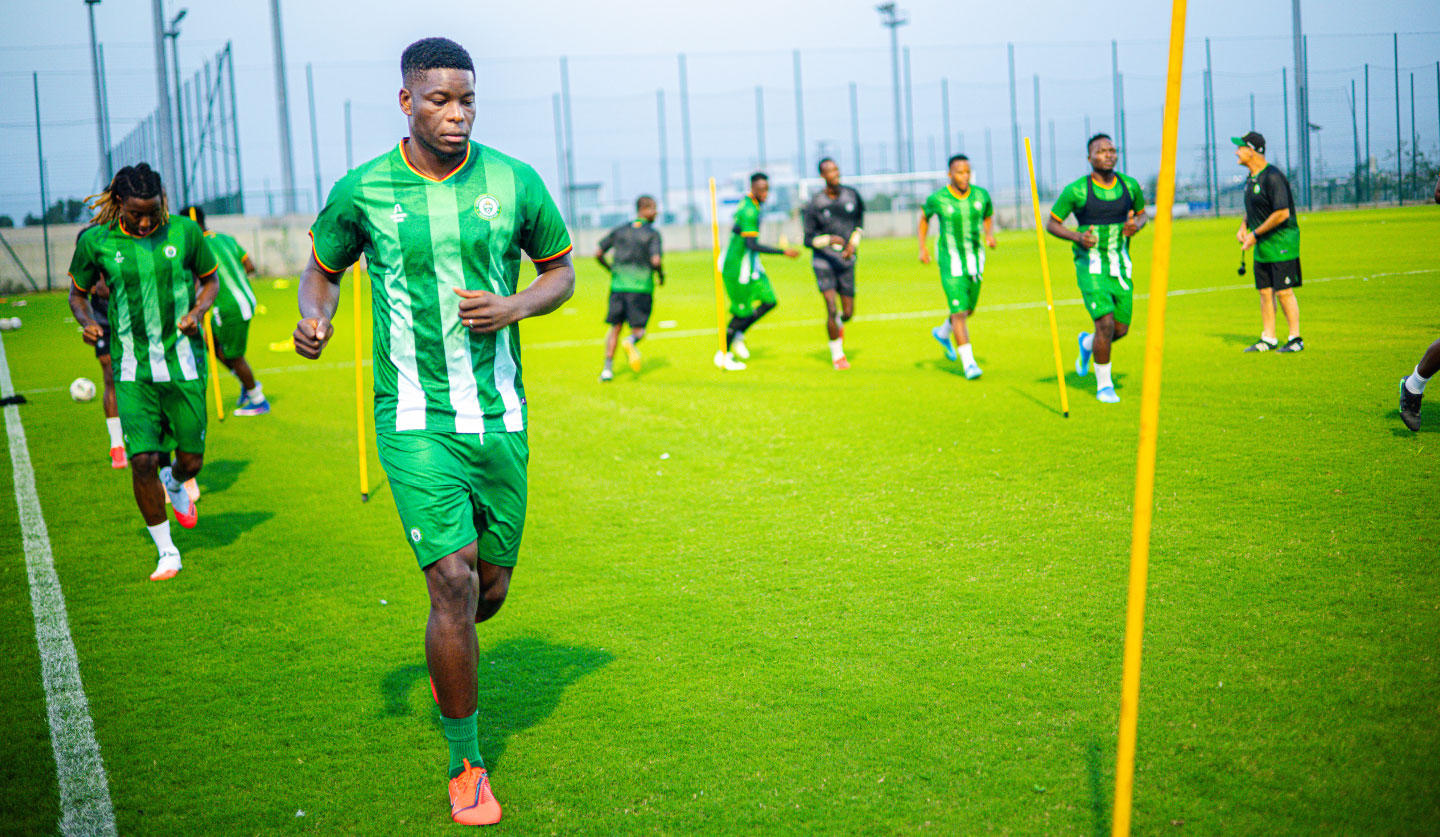
Warriors Begin Preparations in Morocco for Sierra Leone Clash
Tue 22 Sep 2026
The Warriors have begun their preparations for Thursday’s AFCON 2027 qualifier against Sierra Leone, holding their first training session at Raja Athletic Club, home of Raja Casablanca, as players assemble in Morocco for the opening assignment of their qualifying campaign. With 19 players already in camp and two more expected later today, head coach Ramon […]

Zimbabwe Football Association 2026 © All Rights Reserved