
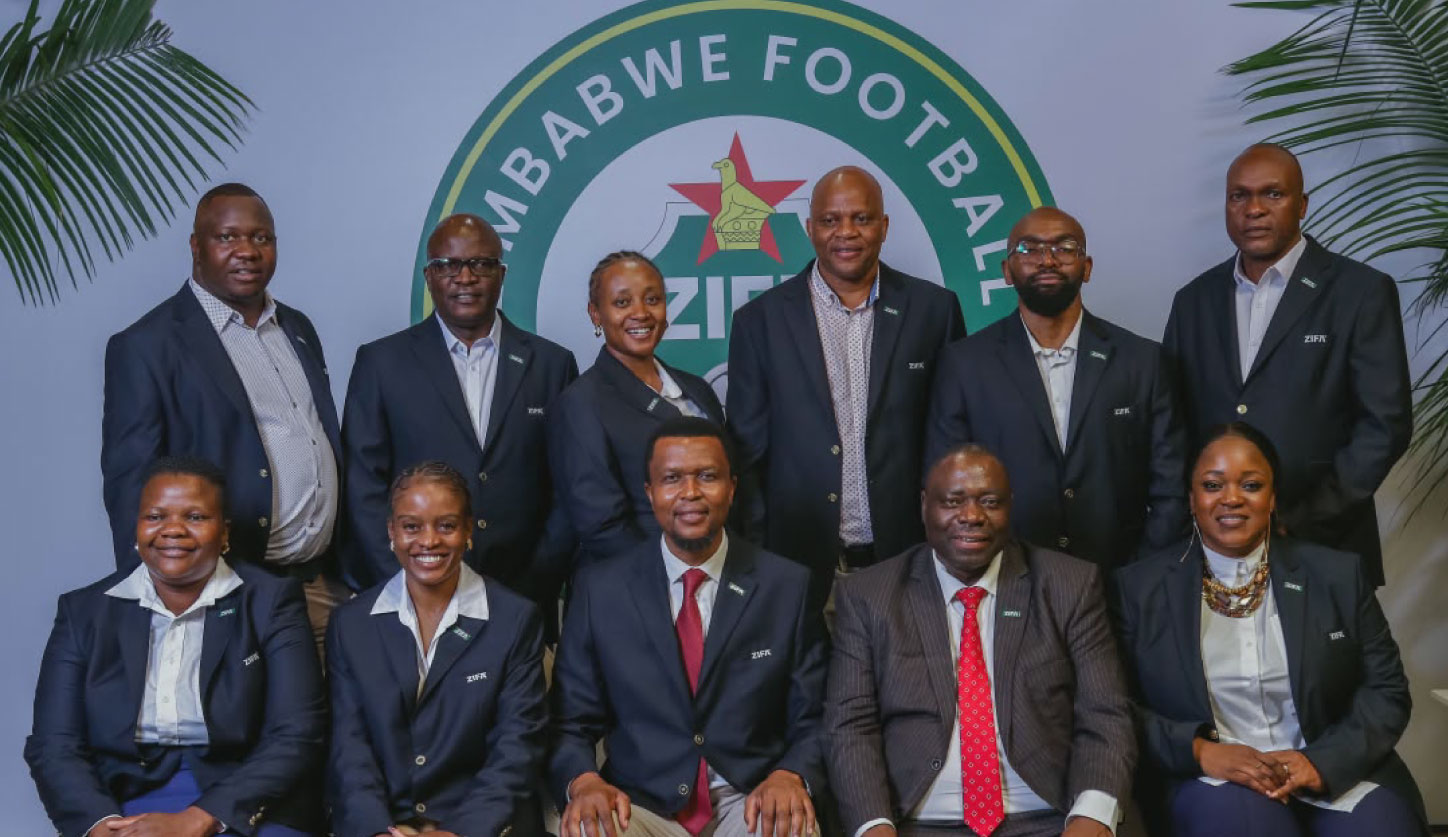
The Zimbabwe Football Association (ZIFA) Executive Committee, led by President Nqobile Magwizi, has delivered on its mandate to stabilise and rebuild Zimbabwean football, ushering in a new era defined by structure, accountability, and forward momentum.
Just over a year since assuming office, the ExCo’s impact is becoming increasingly evident – not through rhetoric, but through deliberate, system-driven reform. From governance and financial discipline to technical development and commercial repositioning, the Association has undergone a measured but meaningful transformation.
At the centre of this progress has been a clear philosophy: build strong institutions first, and results will follow.
Speaking at the 2026 ZIFA Congress, Magwizi reflected on the journey so far, noting that the past year required both patience and resolve.
“We understood from the beginning that the task ahead was not to make noise, but to build structure,” said Magwizi. “Stability was our first priority. Now, we are moving with purpose into a phase of delivery – where our work begins to translate into tangible outcomes across all areas of the game.”
A cornerstone of the ExCo’s work has been institutional reform. ZIFA has placed renewed emphasis on governance, aligning its operations with global best practice and strengthening internal systems to ensure consistency, transparency, and accountability. This has included the reorganisation of the Secretariat, the introduction of clearer reporting structures, and the implementation of ethical standards that guide leadership conduct.
Financial discipline has been equally central to the rebuilding process. Under the stewardship of the Finance Committee, chaired by Davison Muchena, ZIFA has made significant strides in restoring credibility and trust in its financial management.
“We have focused on ensuring that every dollar is accounted for and aligned to the Association’s strategic priorities,” said Muchena. “Financial integrity is not just about compliance – it is about building confidence among stakeholders, partners, and the football community at large.”
That renewed confidence is already translating into stronger partnerships and increased commercial interest in Zimbabwean football.
Beyond governance and finance, the ExCo has prioritised capacity building and human capital development as key drivers of long-term success. Through strategic partnerships with institutions such as Midlands State University and the rollout of programmes like the FIFA-CIES Sports Management course, ZIFA is actively investing in the skills and knowledge base required to sustain the game.

Vice President Kennedy Ndebele emphasised the importance of this approach, describing it as a critical shift in mindset.
“For a long time, we have focused primarily on the field of play, but strong football nations are built off the field as well,” said Ndebele. “We are now deliberately investing in administrators, referees, coaches, and all the people who make the game function. That is how you create a system that can stand the test of time.”
This renewed focus on systems and structure has also brought clarity and direction to national team programmes.
The senior men’s national team, the Warriors, have benefited from a more structured approach that blends locally developed talent with players from the diaspora. This deliberate strategy has strengthened squad depth while reinforcing a sense of national identity and belonging among Zimbabwean players worldwide.
At the same time, the ExCo has significantly elevated its commitment to women’s football, recognising it as a critical pillar of the game’s growth.
Under the leadership of Vice President Loveness Mukura, ZIFA launched its Women’s Football Strategy, a comprehensive framework aimed at strengthening structures, increasing participation, and improving competitiveness.
“We are building a system that gives women’s football the attention, resources, and structure it deserves,” said Mukura. “From grassroots development to national team performance, our focus is on creating opportunities and ensuring that young girls across Zimbabwe can see a future in the game.”
The implementation of this strategy is already underway, with increased participation in regional competitions, development programmes for young players, and hosting opportunities such as the CAF GIFT initiative providing valuable exposure.
Complementing these efforts is the expansion of grassroots football through initiatives like the BancABC Roots Impact programme, which aims to reach thousands of young players across all provinces. By strengthening the base of the football pyramid, ZIFA is laying the foundation for a more sustainable and competitive future.
Infrastructure development has also begun to take shape, with the Association working closely with government and international partners to secure land and resources for modern football facilities. Through the FIFA Forward programme, the construction of FIFA Arenas represents an early but important step in addressing long-standing infrastructure gaps.
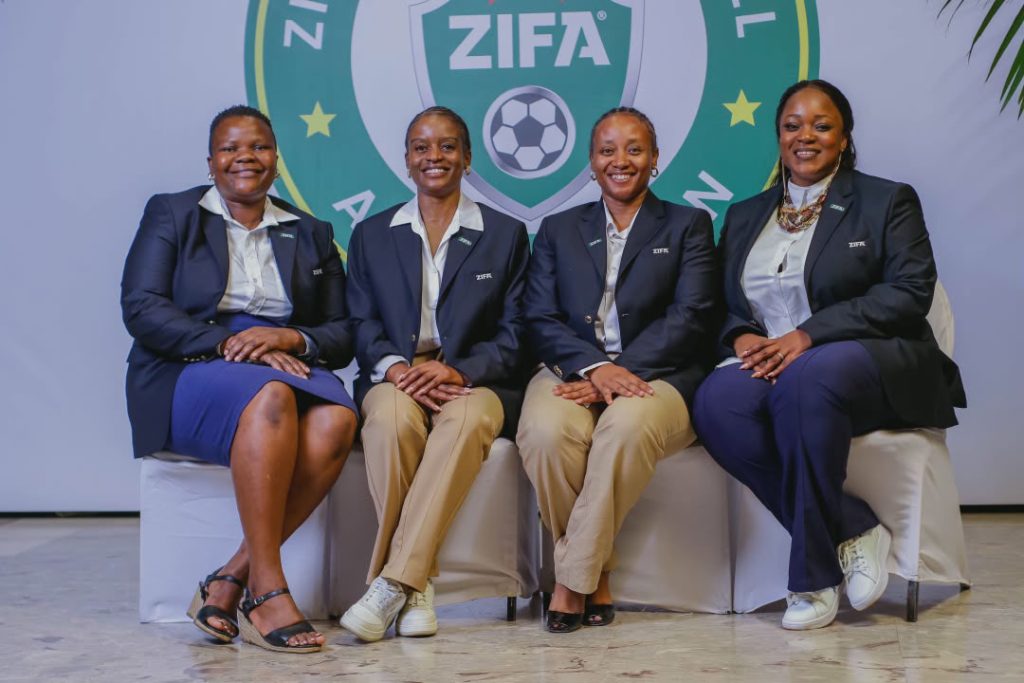
Equally important has been the ExCo’s commitment to integrity and ethical leadership.
In an environment where public trust had previously been eroded, the current leadership has made it a priority to lead by example – placing accountability, transparency, and ethical conduct at the heart of its operations.
Magwizi reaffirmed this stance in his address, stressing that leadership must always serve the institution rather than the individual.
“The trust placed in us is not personal – it is collective,” he said. “We have a responsibility to protect that trust through our actions and decisions every single day.”
Supporting this shift has been a deliberate effort to rebuild the Association’s image and reconnect with stakeholders across the football ecosystem.
ZIFA Marketing Committee Chairperson Kudzai Kadzombe highlighted the importance of this work, noting that restoring credibility has been central to the Association’s broader transformation.
“Our focus has been on rebuilding trust and repositioning ZIFA as a credible, professional organisation,” said Kadzombe. “That means consistent communication, transparency in our actions, and creating a brand that stakeholders can believe in again. We are not just telling a new story – we are working to ensure that our actions match that story.”
This emphasis on integrity and reputation has been reinforced by the introduction of stronger governance frameworks, as well as the continued enforcement of codes of conduct across various aspects of the game, including refereeing and administration.
Taken together, these efforts point to an Association that is steadily finding its footing again.
While challenges remain – particularly around infrastructure and financial constraints – the direction of travel is clear. ZIFA is no longer defined by instability, but by structure. Not by uncertainty, but by purpose.
The Executive Committee’s work over the past year has not sought quick wins, but sustainable progress. It has been about rebuilding credibility, strengthening systems, and creating an environment where Zimbabwean football can grow with confidence.
As the Association moves further into its delivery phase, the expectation is that these foundational gains will begin to translate into greater success on the pitch, stronger commercial growth, and deeper engagement with communities across the country.
For now, the signs are encouraging.
ZIFA’s leadership has steadied the ship. It has set a clear course. And most importantly, it has begun to restore belief – in the institution, in the process, and in the future of Zimbabwean football.
More News

Warriors Begin Preparations in Morocco for Sierra Leone Clash
Tue 22 Sep 2026
The Warriors have begun their preparations for Thursday’s AFCON 2027 qualifier against Sierra Leone, holding their first training session at Raja Athletic Club, home of Raja Casablanca, as players assemble in Morocco for the opening assignment of their qualifying campaign. With 19 players already in camp and two more expected later today, head coach Ramon […]

Zimbabwe Football Association 2026 © All Rights Reserved